Where the Best Brisket Has Since Moved
The Texas Monthly top list once pointed to a corridor. It now points in several directions at once.
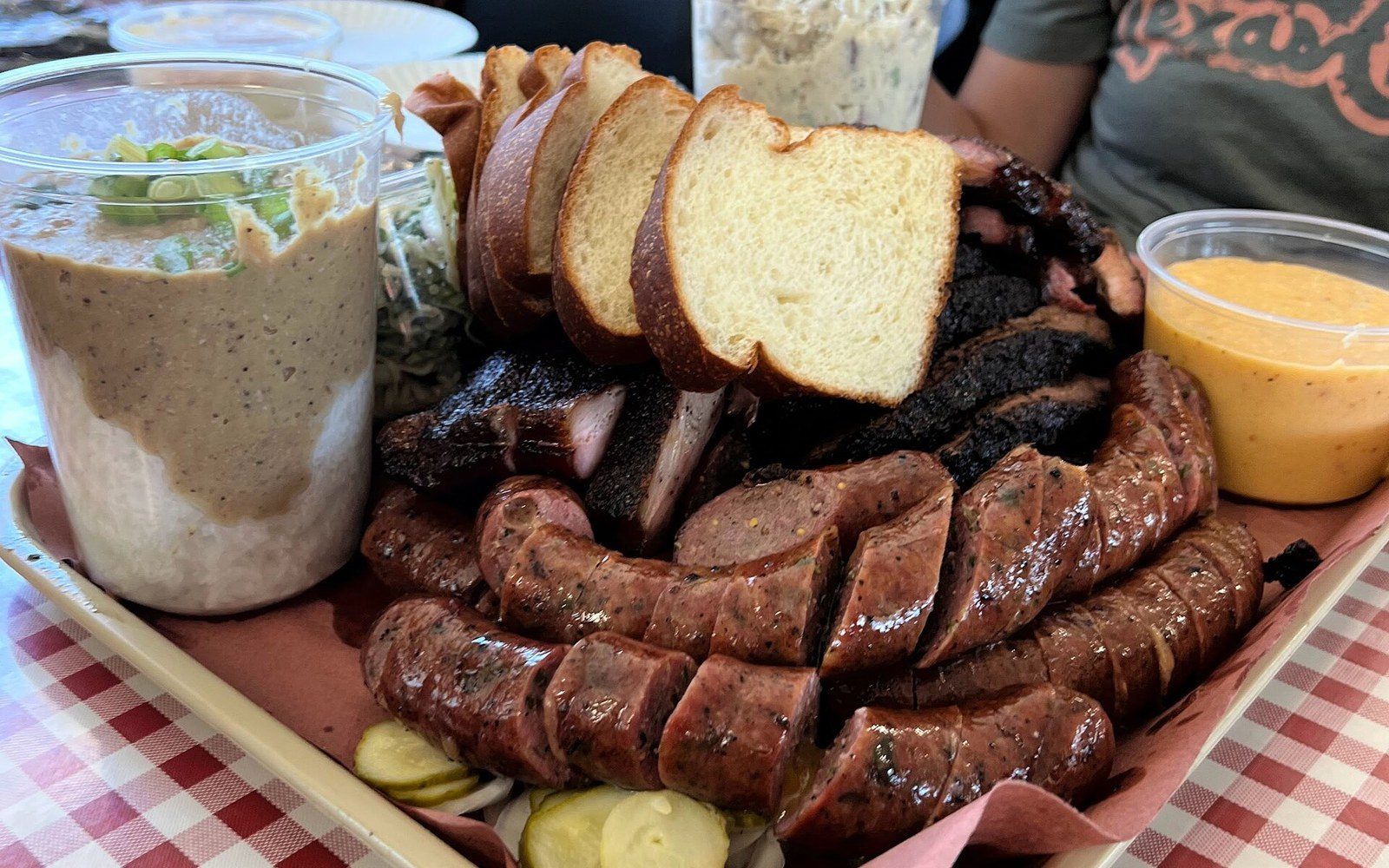
The plates the Top 50 now points to sit outside the city limits.
Photo: A plate of Texas barbecue served at Goldee’s Barbecue in Fort Worth, Texas · Wikimedia Commons
Three Addresses Redrawn the Map
For most of the last quarter-century, the pilgrimage logic of Central Texas brisket ran roughly south from Austin along U.S. 183 and U.S. 90A — to Lockhart, to Luling, back up through Lexington to Snow's BBQ and pitmaster Tootsie Tomanetz, out to Franklin Barbecue on East 11th Street. The places worth the drive were, almost without exception, places already on the map when Texas Monthly began publishing its Top 50 BBQ list. That consensus, held for years, has now visibly cracked.
Three operations — Goldee's Barbecue in Fort Worth, Interstellar BBQ in Bee Cave, and Distant Relatives in Austin — represent the documentary evidence. Each appears in Texas Monthly's most recent ranking cycle. Each opened after 2018. Together they mark a shift that Texas Monthly's own critics, including barbecue editor Daniel Vaughn, have described in print: the concentration of craft in a handful of corridors is loosening.
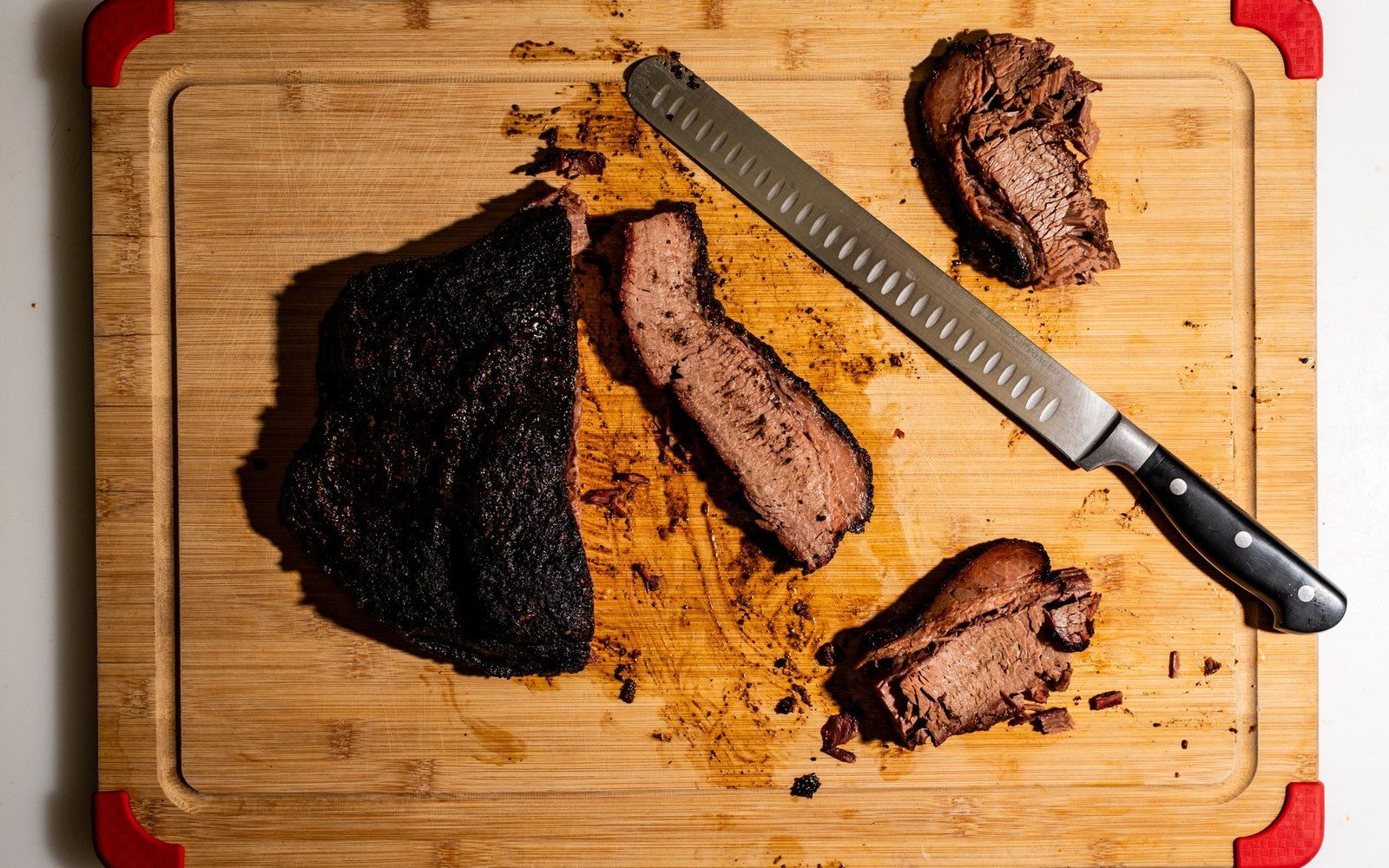
Weighed and handed over on paper — the market habit that outlived the market.
Photo: Alex Gonzo / Pexels
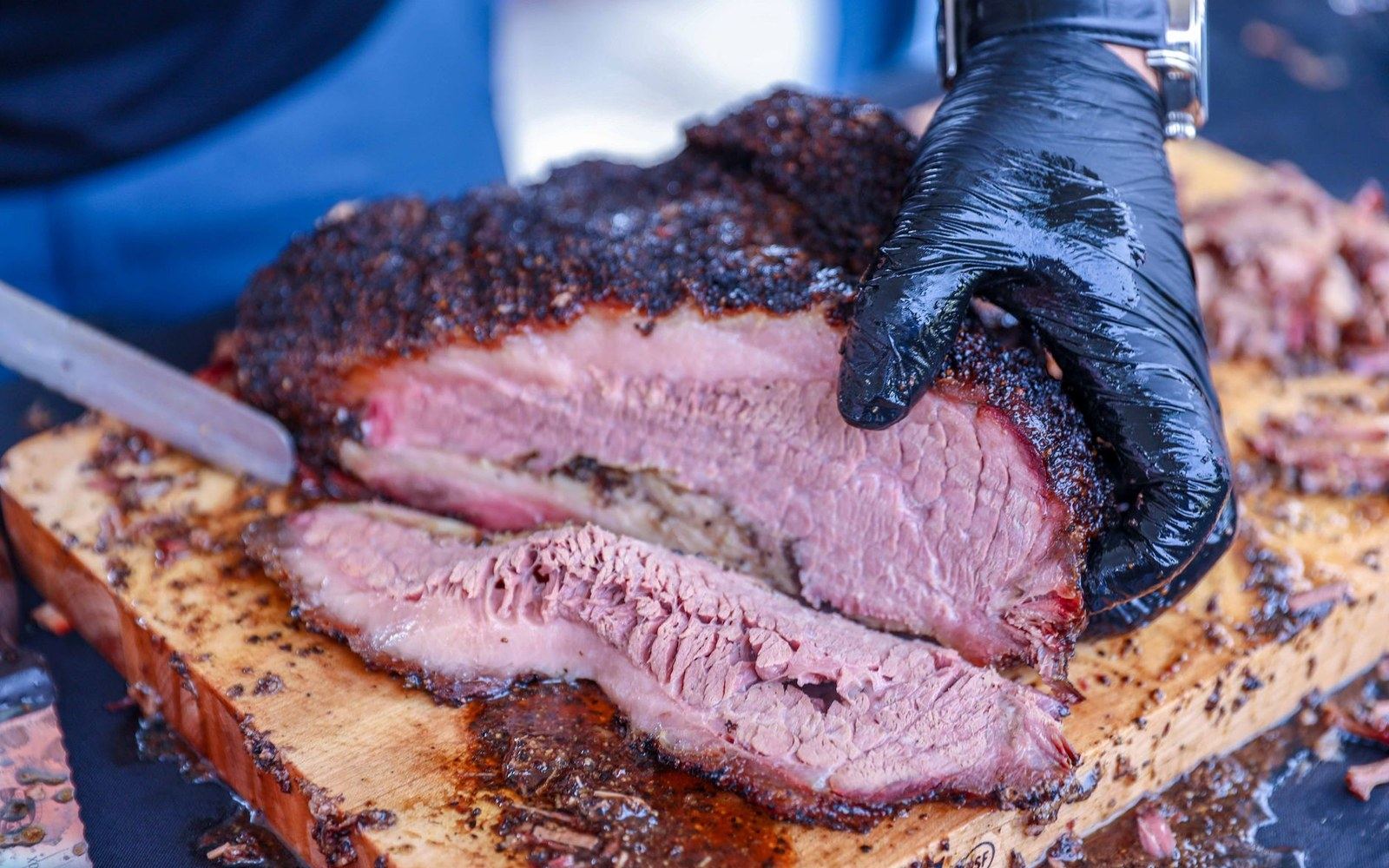
Direct-fired brick, worked by hand. The fire is read rather than timed.
Photo: Hayden Walker / Pexels
What Each Place Represents
Goldee's, opened in Fort Worth in 2021, landed at number one on the Texas Monthly Top 50 list published in 2021 — the first time in the list's history that a Fort Worth operation claimed that position. The achievement was methodologically significant: the list is based on unannounced visits by a panel of judges, and Goldee's was barely months old when reviewers arrived. The pit crew — a group of friends in their twenties who studied under established pitmasters before opening — built their program around the offset smoker and post oak that define the Central Texas canon, but did so 190 miles north of Lockhart. Fort Worth had long occupied a secondary position in Texas barbecue geography; Goldee's dissolved that assumption in a single ranking cycle.
Interstellar BBQ, opened in 2019 in Bee Cave — the suburb west of Austin along Texas 71 — placed second on the same 2021 list behind Goldee's, which absorbed most of the attention, and the operation has remained near the top of subsequent rankings. Pitmaster John Bates built a reputation on brisket technique that reviewers described as exceptionally consistent, and the Bee Cave location, once considered merely suburban, is now a destination in its own right. The address matters: Interstellar sits well outside the traditional Austin proper footprint, in a corridor that a decade ago carried no serious barbecue gravity at all.
Distant Relatives, opened in Austin in 2021 by pitmaster Damien Brockway, occupies different methodological ground. Where Goldee's and Interstellar represent geographic displacement, Distant Relatives represents a deliberate expansion of the canon itself. Brockway draws on West African and African-American culinary traditions alongside the Central Texas framework — brisket is present and technically accomplished, but the menu situates it inside a broader lineage that the standard post-oak-and-beef-rib template does not acknowledge. Texas Monthly critics have written about Distant Relatives as evidence that the list's own criteria are evolving, not merely that the addresses are changing.
Key openings and rankings
The List as Seismograph
The Texas Monthly Top 50 has always functioned partly as a historical document — a record of where craft concentrated at a given moment — and the 2021 cycle is the clearest evidence yet that the moment has changed. Aaron Franklin's operation on East 11th remains a canonical reference point, and Snow's in Lexington retains its standing, but neither anchors the leading edge of the list the way each once did. The geographic centre of what the list rewards has moved: north toward Fort Worth, west into the Hill Country suburbs, and methodologically outward into traditions the original Central Texas framework treated as peripheral.
What this means for the older corridor — Lockhart, Luling, Lexington — is not erasure. Kreuz Market and City Market still operate; Tootsie Tomanetz still tends the pit at Snow's on weekend mornings. But the newer operations are winning the rankings, and the rankings, whatever their limitations as criticism, are what move the pilgrim traffic. The map has been redrawn. The driving directions are longer now, and they point in more than one direction.