Post Oak, the Offset Smoker, and What Wholesale Brisket Costs Now
The math behind a brisket plate has changed more since 2019 than in the previous decade combined.
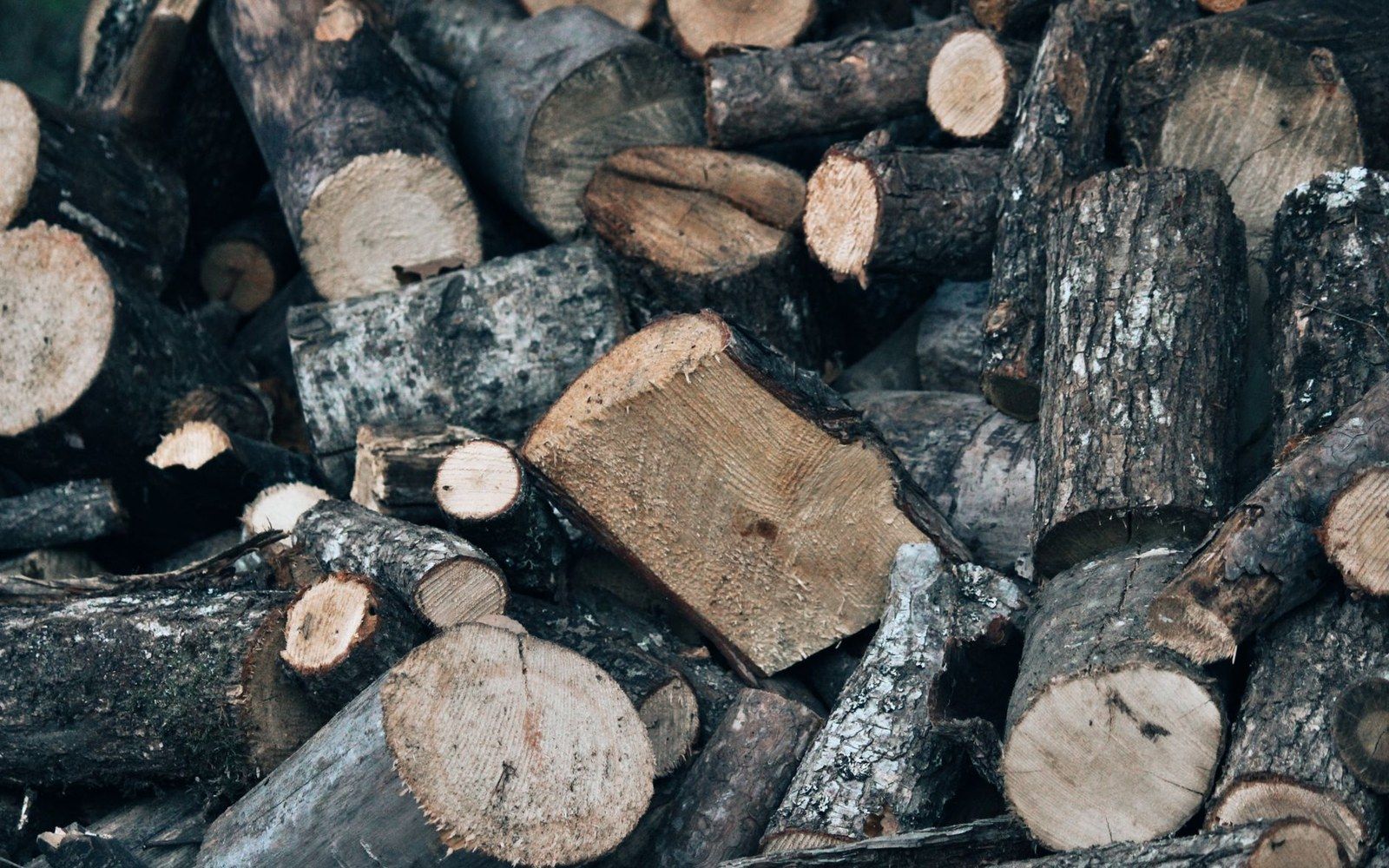
Post oak by the cord: fuel is a line item that moves with the wholesale price.
Photo: mehmet teke / Pexels
The Squeeze at the Supply End
Whole packer brisket — the full cut, point and flat together — averaged roughly $2 per pound at the commodity level in 2019, according to USDA Agricultural Marketing Service weekly reports. By late 2021 it had more than doubled, peaking above $4 per pound in some weeks as pandemic-era cattle processing bottlenecks hit Central Texas pitmasters at exactly the moment demand surged. Prices retreated through 2023 but settled well above pre-pandemic floors, leaving operators who built their business models on $2 brisket structurally exposed.
Fuel compounds the pressure. Central Texas barbecue's identity rests on post oak — Quercus stellata, a hardwood native to the sandy soils east of the Balcones Escarpment — and its supply geography is local by necessity. Wood dealers serving the corridor from Lockhart to Lexington draw from a band of East Texas and Central Texas forest that does not scale the way commodity inputs do. Drought years reduce the harvestable stock; hotter summers accelerate seasoning requirements. Pitmasters from the Lockhart lineage and the newer Austin wave alike report wood costs rising in step with beef.
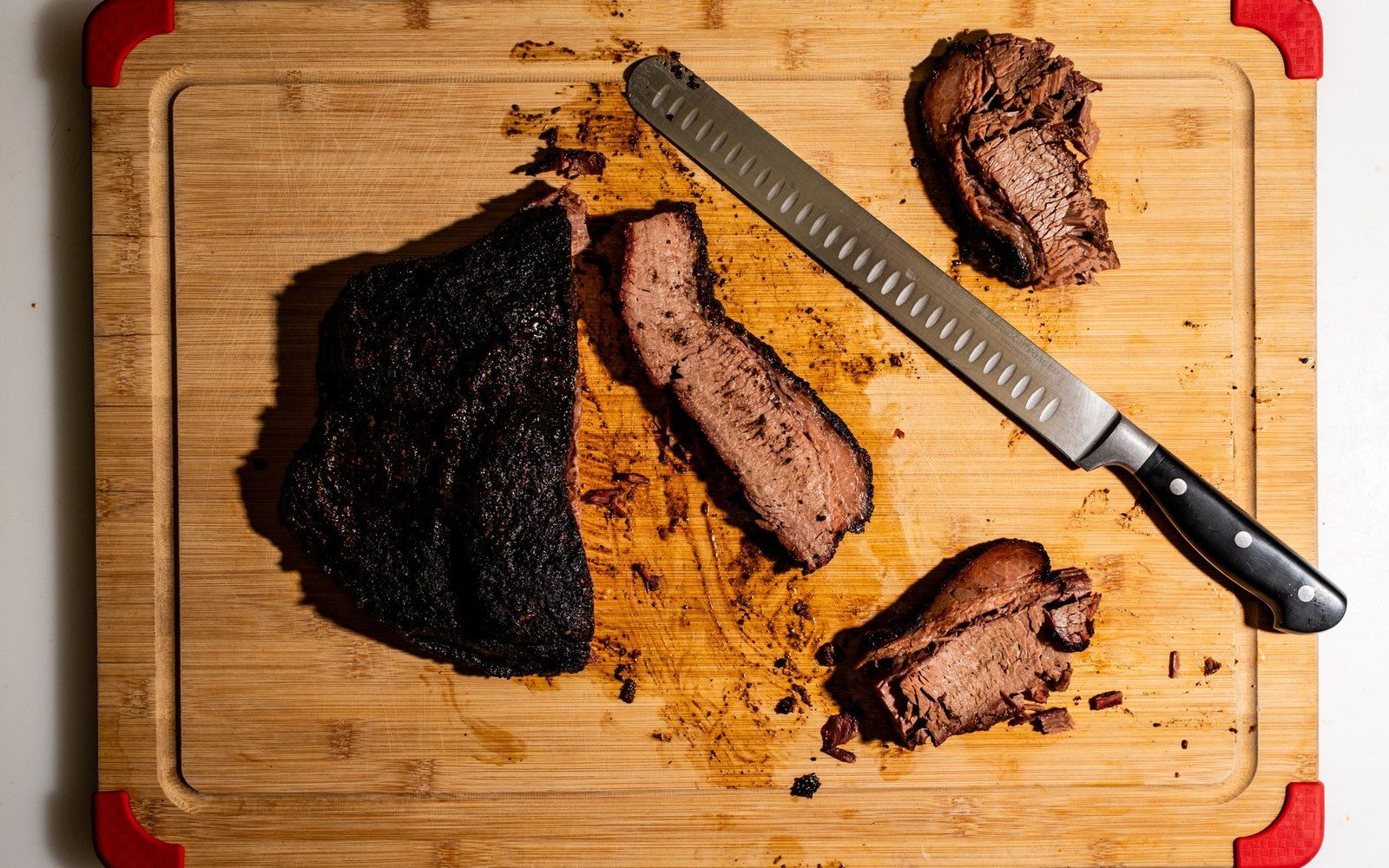
Weighed and handed over on paper — the market habit that outlived the market.
Photo: Alex Gonzo / Pexels
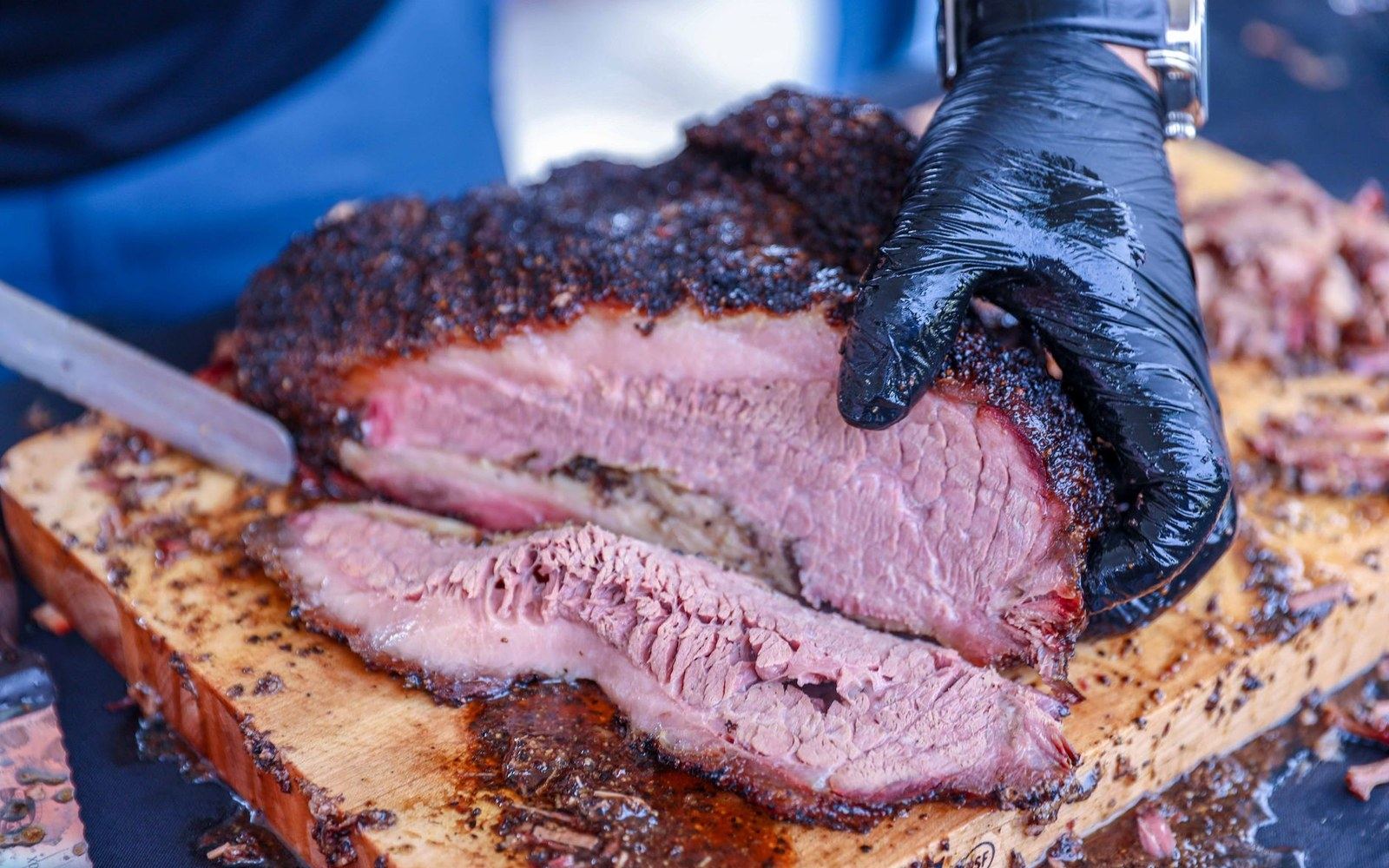
Direct-fired brick, worked by hand. The fire is read rather than timed.
Photo: Hayden Walker / Pexels
The choice of pit magnifies the difference between a well-capitalised operation and a lean one. Brick pits — the kind used at the oldest Lockhart houses — retain heat with enormous thermal mass, burning less wood per pound of meat once brought to temperature. An offset smoker, the steel firebox-and-cooking-chamber design that defines the newer generation from Aaron Franklin forward, demands more active fire management and more wood per cook, but costs a fraction of a brick-pit build-out and allows operators to scale capacity incrementally. For a new room running tight margins, that trade-off is real: lower entry cost, higher ongoing fuel burn.
Daniel Vaughn at Texas Monthly has tracked how those combined pressures — meat, wood, labour — are reflected in plate prices that now routinely clear $25 at top-tier Austin spots, a figure that would have seemed implausible in 2015.