The Continental Club and Antone's: What Staying Open Looks Like
Two rooms on the short list of Austin venues that opened decades ago and are still booking acts.
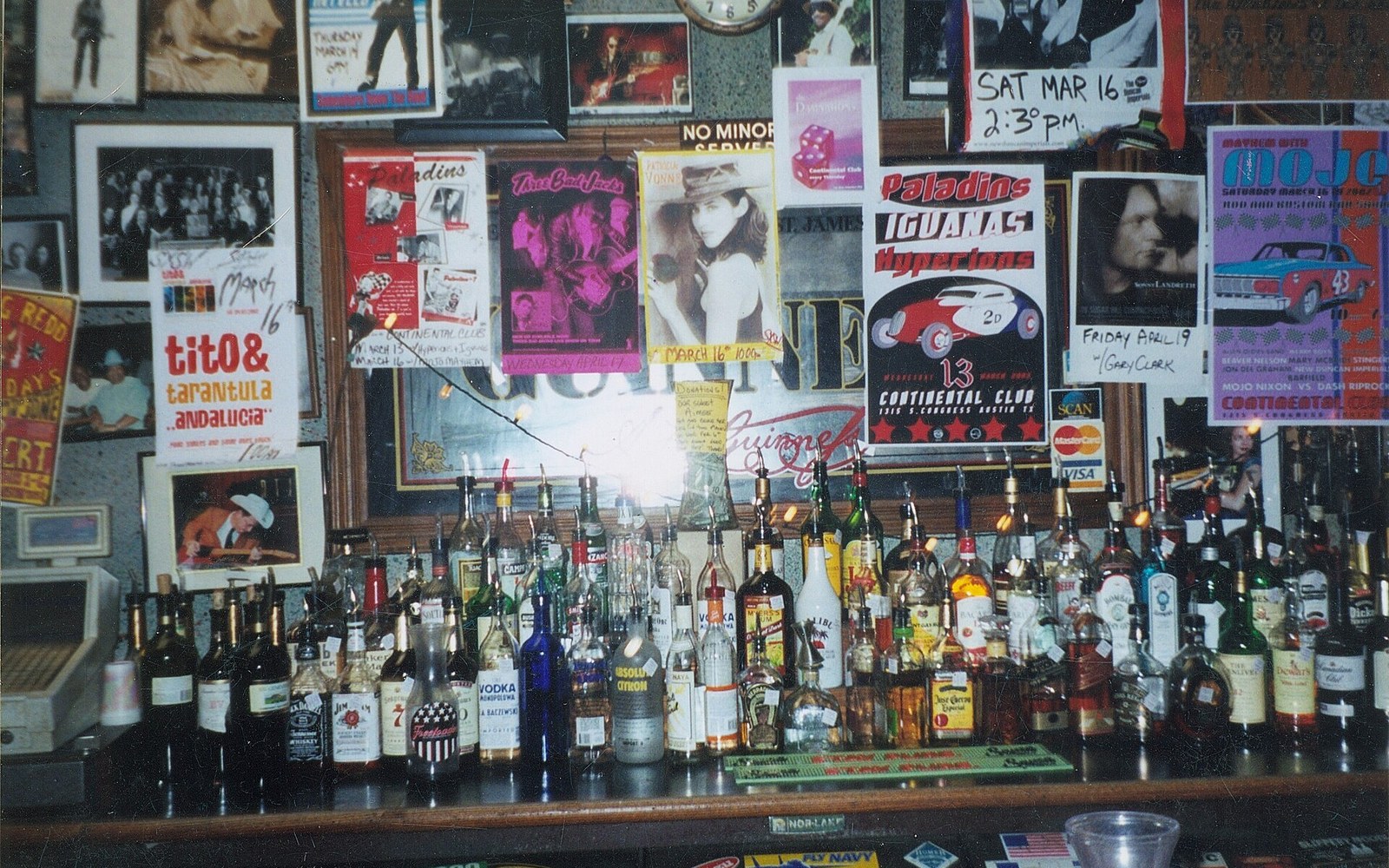
Two rooms that stayed open by owning their own calendars.
Photo: Continental Club Austin · Wikimedia Commons
A Long Run, Paid for in Reinvention
The Continental Club opened in 1955 on South Congress Avenue as a supper club, part of the mid-century entertainment strip that predated Austin's reputation as a music city by a generation. It converted to live music over the following decades, and by the time Steve Wertheimer acquired it in 1987, the room had already outlasted several identities. Under Wertheimer, the Continental settled into its current shape: a narrow, low-ceilinged space whose stage has hosted blues, country, and rock programming six and sometimes seven nights a week. The club's booking record, documented in the Austin American-Statesman and the Austin History Center's collection, includes decades of residencies by players who built careers in Austin before anyone called the city a music capital. That continuity — the same room, the same dimensions, the same slightly sticky floor — is the point.
Antone's came later and harder. Clifford Antone opened the club in 1975 on Sixth Street as an explicit home for blues, importing national and Chicago-circuit acts at a time when Austin's live-music economy was built around singer-songwriters and country. The room moved several times across subsequent decades — to a location on Guadalupe, back to Sixth Street, and eventually to its current address on East Fifth Street — each move tracking both the economics of the lease market and the turbulence in the club's ownership history. Clifford Antone died in 2006. The club closed and reopened more than once before settling at the Fifth Street location, where it continues to present blues alongside a broader booking calendar.

A frontage still lit. The district kept its designation and lost rooms anyway.
Photo: Tim Mossholder / Pexels

Zilker Park under festival load, negotiated with the city each year.
Photo: Queens of the Stone Age at Austin City Limits Music Festival 2007 · Wikimedia Commons
Both rooms survived the closures that thinned the Red River Cultural District after 2019, a period in which rising rents, pandemic revenue loss, and post-boom foot-traffic patterns eliminated venues that had operated for years. The Continental Club's South Congress address sits outside the Red River corridor, which may explain part of its durability; Antone's Fifth Street location is similarly removed from the block-by-block attrition that hit the Dirty Dog, Barracuda, and others.
What the two clubs share is a willingness to run programming through lean years rather than convert to higher-margin uses. Neither operates a festival. Neither is a brand. They are rooms with calendars, and the calendar is what survival looks like in a city whose music economy increasingly concentrates its money in events that arrive once a year and leave.