SXSW's Defence Sponsorship, and the 2024–25 Walkouts
A music conference born in 1987 to serve Austin's local scene now navigates defence contracts, artist boycotts, and the economics that make both necessary.
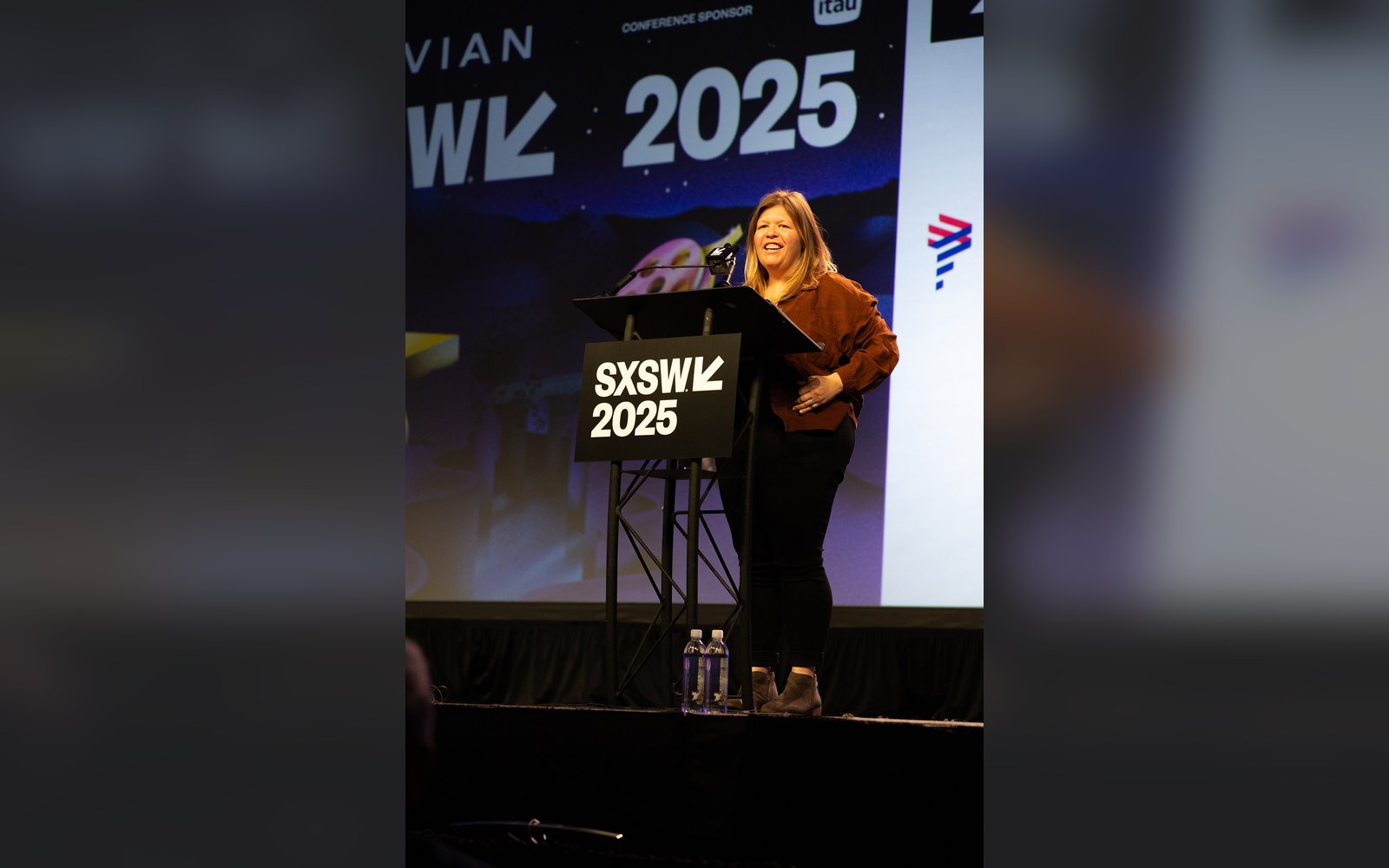
The 2025 festival ran after the withdrawals, with the sponsor list changed.
Photo: Nicole Klepadlo of Red River Cultural District at SXSW 2025 01 · Wikimedia Commons
The Sponsorship at the Centre
South by Southwest was founded in 1987 as a modest industry gathering designed to put Austin's music community in front of labels, managers, and bookers who rarely made it to Central Texas. Nearly four decades later, the festival and conference sprawl across ten days each March, draw hundreds of thousands of attendees, and require a sponsorship base that no ticket price structure alone could support. By 2024 that base included the U.S. Army and defence contractor Palantir Technologies, whose data-analytics work for military and intelligence agencies made its presence at a creative-industry conference immediately contentious.
The objections sharpened into organised action ahead of SXSW 2024. A coalition of artists, filmmakers, and panellists circulated an open letter calling on the festival to drop its defence and military-industrial sponsors, arguing that the arrangement was incompatible with a programme that also hosted panels on humanitarian technology, press freedom, and social justice. Signatories numbered in the hundreds and included musicians, documentary filmmakers, and speakers already scheduled to appear. Several withdrew from the programme entirely rather than share a platform — and implicitly, a revenue stream — with sponsors whose core business they identified with weapons systems and surveillance infrastructure.

A frontage still lit. The district kept its designation and lost rooms anyway.
Photo: Tim Mossholder / Pexels
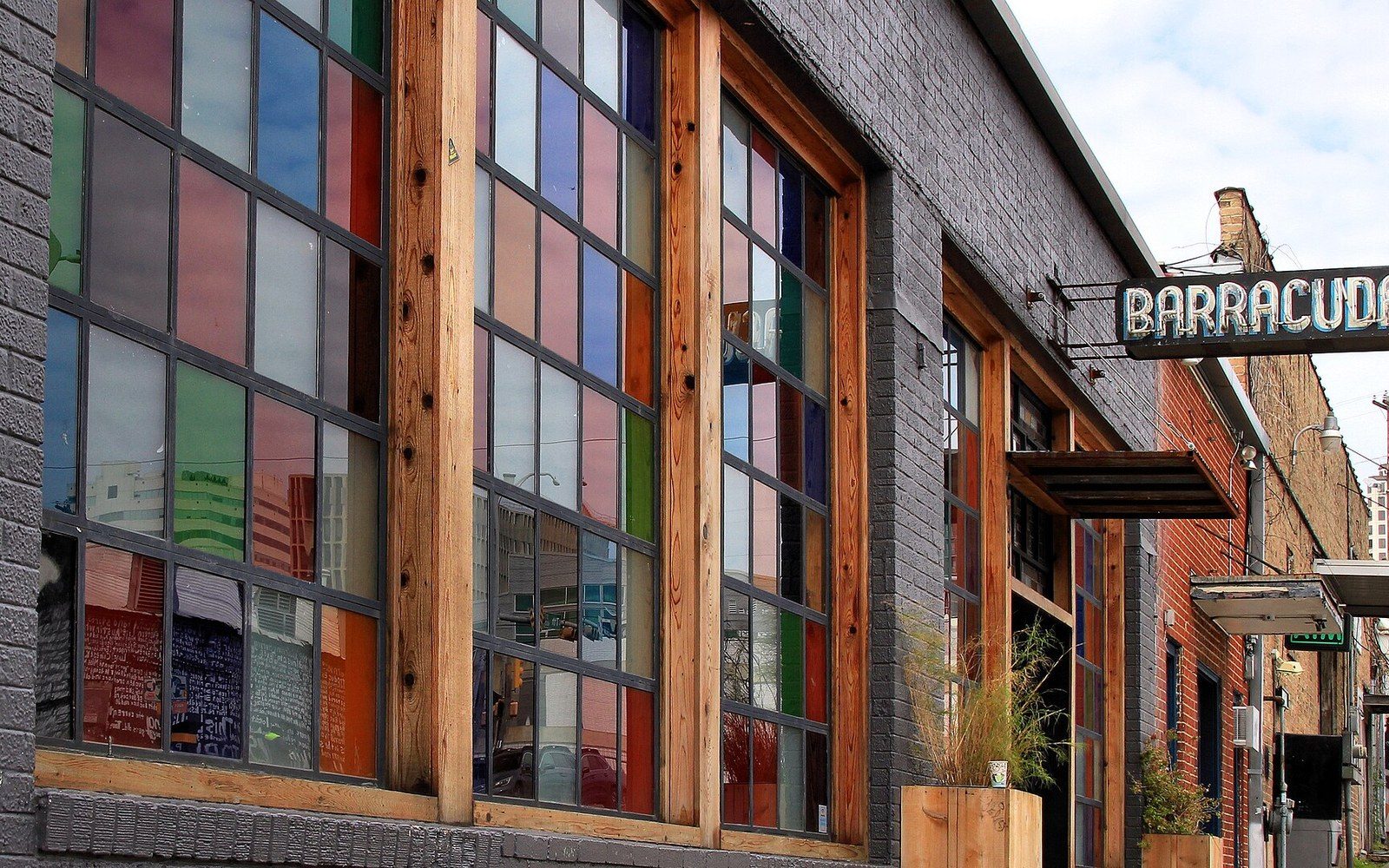
Barracuda’s frontage — one of the rooms counted out of the district.
Photo: Barracuda Austin 2019 · Wikimedia Commons
SXSW's published response acknowledged the concerns without capitulating. Festival leadership stated that the conference's value lay precisely in convening people with conflicting viewpoints and that excluding categories of legal industry from participation would compromise that mission. The Army and Palantir remained on the 2024 sponsor roster. Withdrawals continued.
2025: The Pattern Held
The controversy did not resolve between cycles. Heading into SXSW 2025, a second and larger wave of withdrawals emerged, this time folding in artists and panellists who cited both the original defence-sponsorship objection and the festival's handling of the previous year's backlash. The 2025 iteration of the boycott drew wider press attention — partly because more prominent names were attached, partly because the surrounding context had shifted. The Gaza conflict had sharpened scrutiny of any institution perceived to have financial links to the U.S. defence sector, and Palantir's contracts with the Department of Defense had become more publicly documented in that period.
SXSW did not publish a change in sponsorship policy before the 2025 event. The festival proceeded, the disputed sponsors remained, and the walkout cohort performed or presented elsewhere in Austin during the same week — an outcome that underlined both the strength of the objection and the limits of its leverage. SXSW's attendance figures and media footprint showed no measurable collapse; the festival's economic weight in Austin is substantial enough that most industry participants calculated that absence cost them more than presence.
Chronology
- 1987SXSW founded in Austin as a music-industry conference
- 2024U.S. Army and Palantir Technologies appear on sponsor roster; open letter circulated; artists and panellists withdraw
- 2024Festival proceeds; disputed sponsors retained; SXSW publishes mission-based defence of inclusive sponsorship
- 2025Second, larger wave of withdrawals; festival again proceeds without policy change
What the Episode Reveals
The tension is structural, not incidental. SXSW's transition from a local music showcase to a global conference-and-festival complex has required it to court sponsors from sectors that an arts-forward audience is likely to find uncomfortable. The U.S. Army has sponsored music and cultural programming at festivals across the country as a recruitment-adjacent branding strategy; Palantir's presence in creative-industry spaces reflects a broader push by data and defence technology companies to reframe themselves as innovation enterprises.
For Austin specifically, the episode tracks alongside the city's larger post-boom identity strain. The same metro that absorbed Tesla, Oracle, and major military-contractor offices after 2020 is also the metro whose Red River Cultural District has lost venue after venue to rising costs — costs partly driven by the tech and defence influx. The music economy that SXSW was built to celebrate is structurally squeezed by the same growth the festival now depends on to fund itself.
Founded to serve Austin's scene, SXSW now mediates between that scene's values and the capital required to stage ten days that the whole industry attends. The defence-sponsorship controversy is the clearest recent expression of how uncomfortable that mediation has become — and how little either side has moved.