Record Downtown Vacancy, in a Skyline That Was Still Topping Out
The cranes stayed up. The tenants did not arrive.
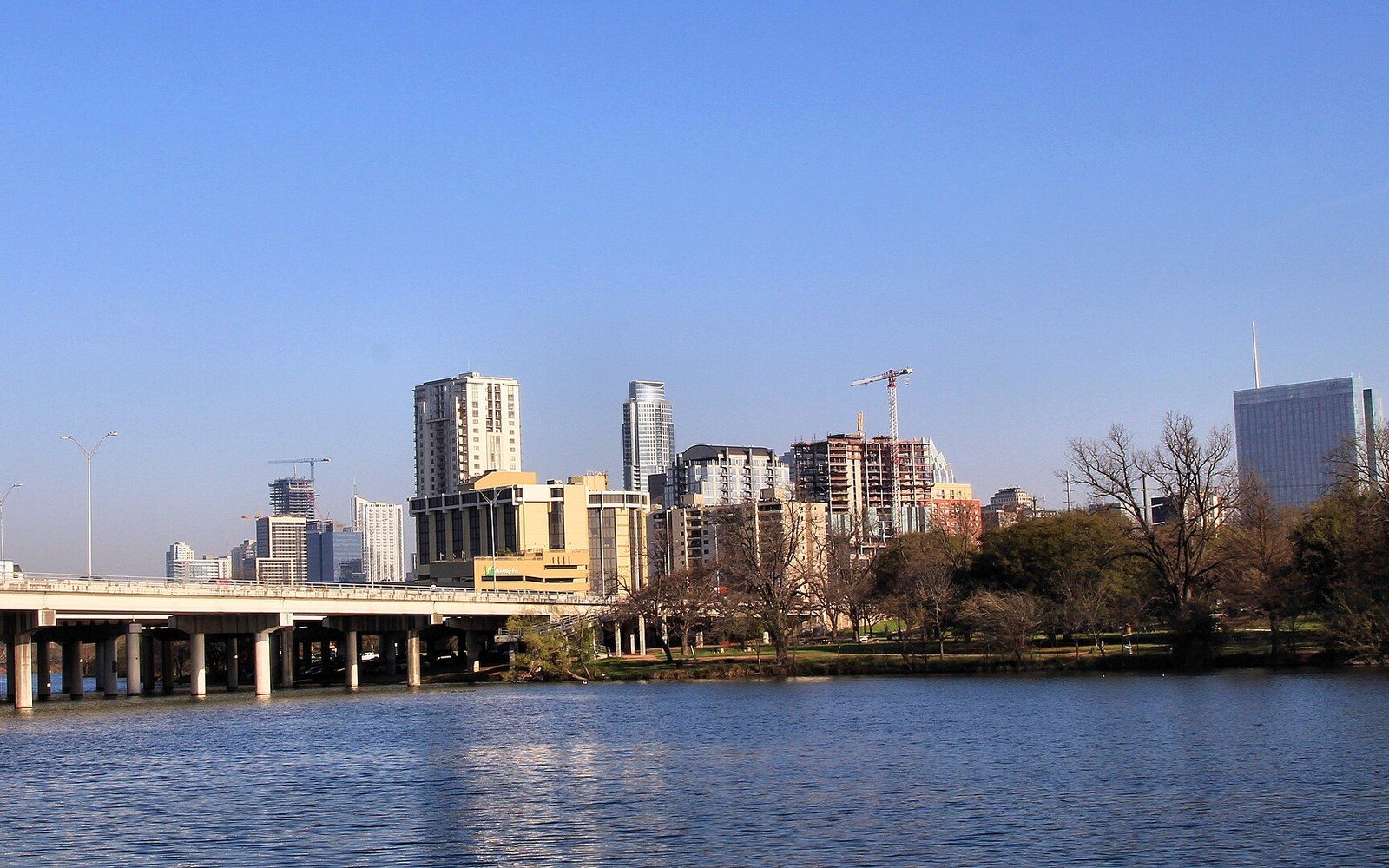
Towers that broke ground in the boom finished into a softer leasing market.
Photo: Austin Downtown 2018 · Wikimedia Commons
What the Numbers Say, Quarter by Quarter
Austin's downtown office market entered 2019 in a condition that looked, from the outside, like permanent health. Vacancy rates for Class A space in the urban core sat in the low single digits, a tightness that had persisted through most of the decade following the 2008 financial crisis. The city's reputation as a tech-relocation magnet — Tesla settling east of the airport, Oracle shifting its headquarters east from Redwood Shores — fed a development pipeline that took years to move from announced permits to delivered floors. By the time those floors arrived, the assumptions behind them had dissolved.
Cushman & Wakefield's quarterly tracking of the Austin central business district shows the inflection point arriving in late 2022 and sharpening through 2023. Overall downtown vacancy — including both direct and sublease space — crossed into the mid-twenties percentage-wise by mid-2024, a figure that would have been dismissed as catastrophist in 2019. CBRE's parallel series tells roughly the same story: the Austin office market recorded negative net absorption for multiple consecutive quarters beginning in 2022, meaning tenants were surrendering more square footage than they were signing for. Sublease space available downtown grew by a factor that no single tech departure explains; it was cumulative, a series of contractions across companies that had expanded in Austin during the pandemic years and then reduced headcount through WARN-notice cycles beginning in 2023.
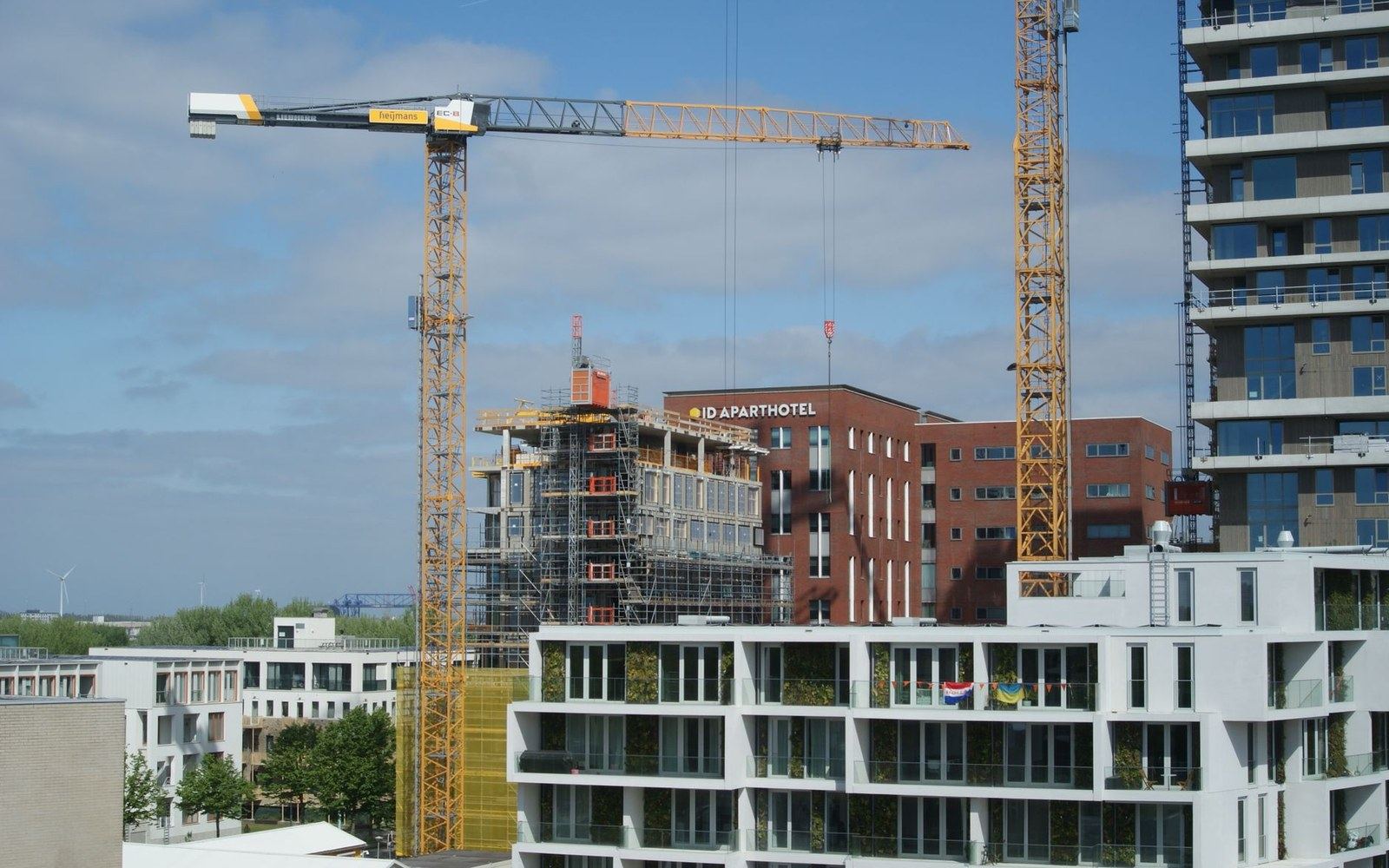
Completions per head led the country while asking rents were already falling.
Photo: Timothy Huliselan / Pexels
The structural irony is not subtle. Austin added roughly seven million square feet of office space between 2019 and 2025 across the broader metro, a construction wave that was planned when the vacancy rate was effectively zero and that could not be stopped once steel and concrete were in the ground. Downtown captured a substantial share of that new supply. Towers that broke ground in 2020 and 2021 — when remote-work patterns were already scrambling the assumptions of every lease pro forma written before March 2020 — delivered into a market that had changed category.
The Towers That Arrived Late
Several specific projects crystallized the timing problem. The Indeed Tower at 200 West Sixth Street, at approximately 36 stories one of the taller postwar additions to the Austin skyline, opened in 2022. Indeed, the hiring-platform company, had committed as anchor tenant when Austin's labor market was accelerating and its own recruitment business was growing with it. By delivery, Indeed had begun reducing its Austin footprint as part of broader workforce cuts. The building was not dark — other tenants occupy floors — but the anchor story illustrated how quickly the underwriting logic of 2019 could age.
The Sixth and Guadalupe tower, delivered in phases and rising to approximately 66 stories to claim the title of Austin's tallest building, brought significant new Class A inventory downtown at a moment when absorption had turned negative. Developments of that scale carry long lead times; the decision cycles that produced them belong to a different economic moment than the one that received them. CBRE data for the Austin CBD showed available sublease space as a share of total inventory climbing steadily through 2023 and into 2024, reflecting not just new supply but the secondary market created when tenants who had signed leases at peak rents tried to offload floors they no longer needed.
Key vacancy figures
| Austin downtown Class A vacancy | low single digits, 2019 (Cushman & Wakefield, CBRE) |
|---|---|
| Net absorption | negative for multiple consecutive quarters beginning 2022 (CBRE Austin office series) |
| Overall downtown vacancy rate | mid-twenties percent range, mid-2024 (Cushman & Wakefield) |
| Austin metro total office space added, 2019–2025 | approximately seven million square feet |
| Sublease overhang | among the larger of Sun Belt CBDs by 2024 (Cushman & Wakefield) |
| Asking rents | softened from 2022 peaks; concession packages lengthened (CBRE) |
Cushman & Wakefield's Austin office reports through 2024 flag the sublease overhang as the more durable problem. Direct vacancy can ease when new leases are signed or buildings are converted; sublease space represents obligations already locked into long-term contracts, shadow inventory that competes with landlords' own available floors and tends to suppress asking rents on both. The Austin downtown market, by 2024, was carrying one of the larger sublease overhangs of any Sun Belt city, a distinction that would have seemed implausible five years earlier.
Why the Cranes Didn't Stop
Development pipelines for major office towers operate on timelines of three to five years from site control to ribbon-cutting, and they are largely irreversible once construction financing is committed and vertical work begins. The towers delivering into Austin's 2023 and 2024 market were not the product of irrational exuberance in those years; they were the product of rational calculation in 2019 and 2020, when vacancy was low, rents were rising, and the city's employment base appeared structurally committed to in-person headquarters functions. The pandemic scrambled that calculus in ways that were not visible at ground-breaking.
Austin's particular exposure was a function of its success. Because so many large employers — Apple committed to its north campus, Samsung to its Taylor fabrication expansion, Oracle to its lakeside headquarters — had made highly visible bets on the city, developers and their lenders extrapolated a sustained demand curve for premium downtown office space. What those corporate moves actually represented, in many cases, was campus-style suburban or peri-urban development rather than dense downtown tenancy. The workers arriving at Apple's north campus were not filling Congress Avenue towers. The Project Connect rail system that might have tied those employment nodes to downtown cores had its scope cut substantially after cost estimates ballooned following the 2020 ballot approval, leaving the transit infrastructure case for downtown office density weaker than the 2019 underwriting had assumed.
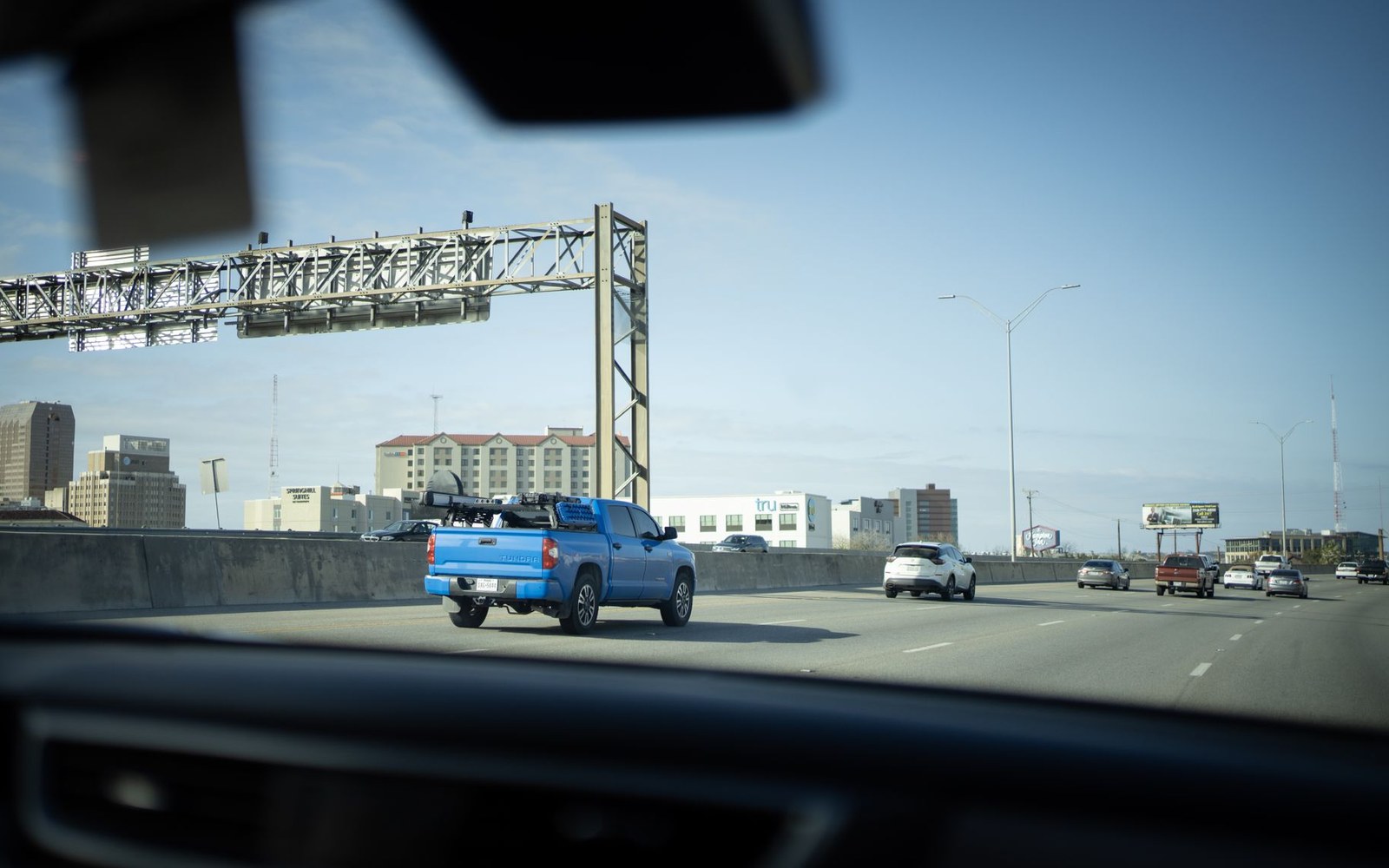
Six lanes through the middle of the city, with the cranes they were widened to serve behind.
Photo: Thomas balabaud / Pexels
The result, as tracked by CoStar Group's ongoing Austin CBD data alongside the Cushman and CBRE series, is a downtown office market that by 2025 had a vacancy rate — among the highest recorded for Austin's urban core since modern brokerage tracking began — sitting alongside a skyline that was still visually completing itself. Cranes came down on towers that opened into a market where asking rents had softened from their 2022 peaks and concession packages — free rent periods, tenant improvement allowances — had grown to levels that compress effective yields for landlords even when headline rents hold.
The Correction's Geometry
Office market corrections do not move like residential ones. Houses sell individually and prices reset with each transaction; Austin's residential median has tracked downward from its 2022 peak in a pattern visible in Austin Board of Realtors monthly data. Office correction is slower and lagged: leases run five, seven, ten years, so the full repricing of a market can take most of a decade to work through. Downtown Austin's vacancy problem in 2024 and 2025 is, in that sense, still early. The leases signed at 2021 and 2022 rents have not all expired. When they do, the reset in effective rents — and in assessed values, property-tax revenue, and the finances of buildings carrying debt at pre-correction cap rates — will be more legible than it is now.
What CBRE and Cushman & Wakefield's Austin office reports document, taken together across the 2019–2025 span, is a market that absorbed a structural shift in how knowledge-economy employers use space — fewer assigned desks, less square footage per employee, longer decisions on lease renewals — at exactly the moment a multi-year construction wave was delivering maximum new inventory. Austin's office vacancy rate reached record levels by 2024 in CBRE's quarterly series, a number that would be startling in isolation but is more accurately read as the arithmetic outcome of two trends — demand contraction and supply completion — that peaked in the same window. The skyline looks finished. The leasing story is not.